
Beyond Miguel Failde and the Las Alturas de Simpson: The Musical Evolution of Cuban Danzón
Explore how Cuban danzón evolved beyond Miguel Failde’s Las Alturas de Simpson through innovations by José Urfé, Aniceto Díaz, later Cuban dance music, and contemporary ideas by Maestro Bobby Ramírez.
BLOG POSTS
Ritmo! Danzon
6/28/20265 min read
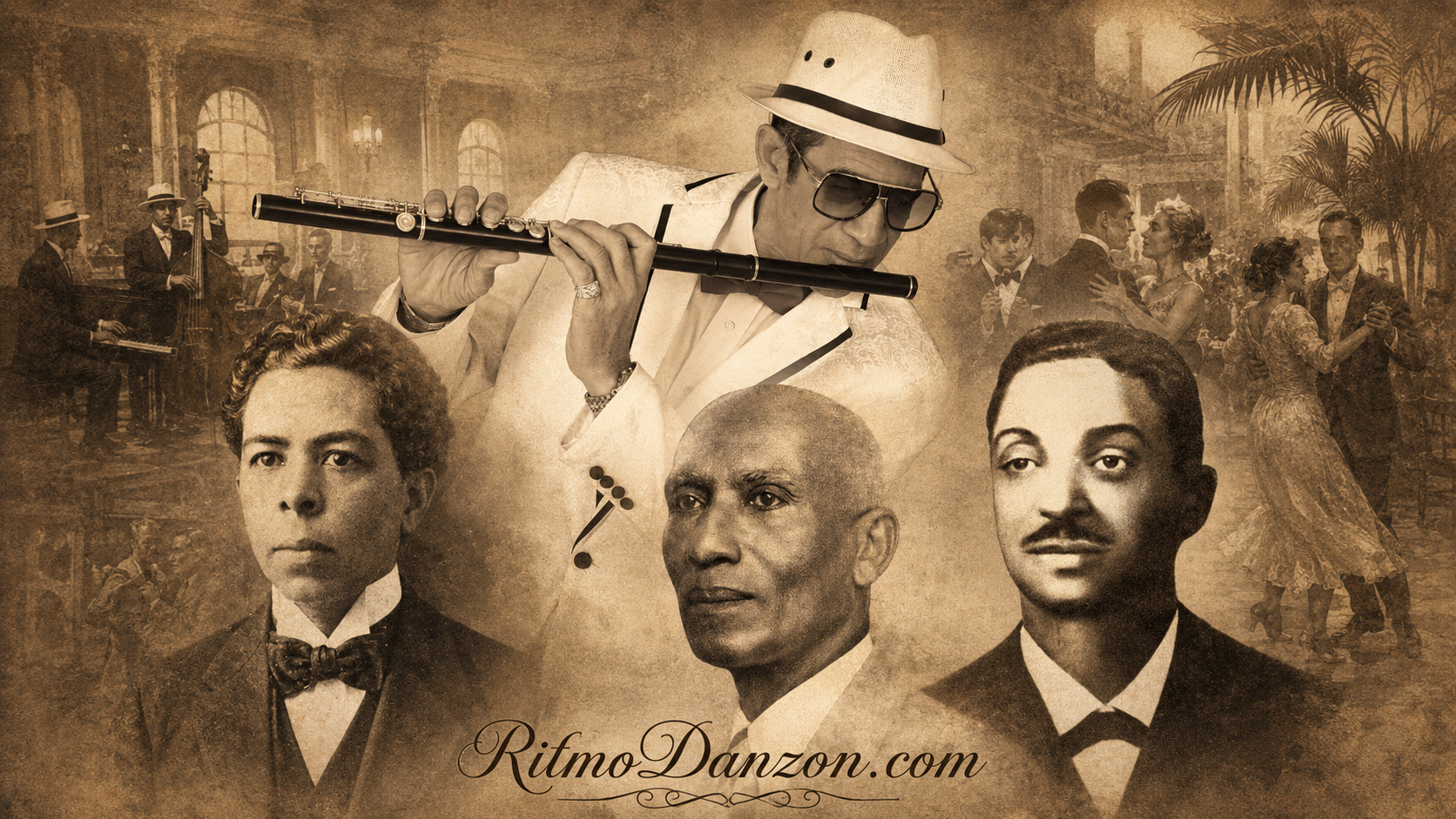
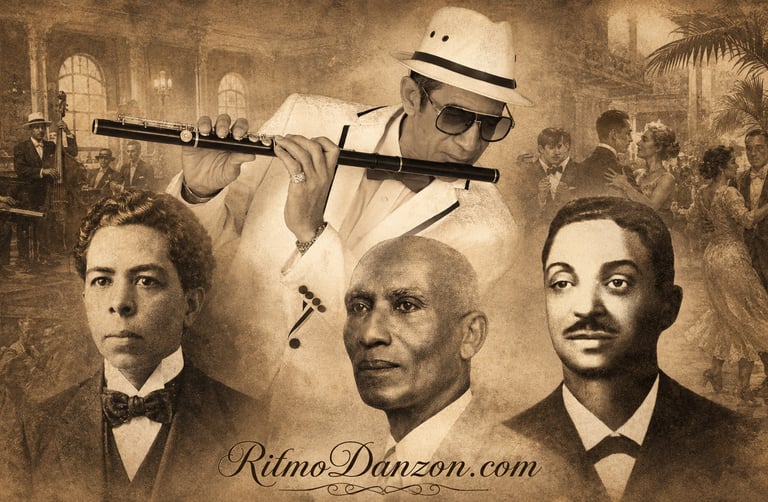
Beyond Miguel Failde and the Las Alturas de Simpson - The Musical Evolution of Cuban Danzón
How Cuba’s elegant national dance continued to grow through rhythm, voice, improvisation, and tradition
A Tradition That Did Not Stand Still
When people speak about the birth of Cuban danzón, the name Miguel Failde naturally comes first. His celebrated Las Alturas de Simpson holds a foundational place in the history of Cuban music and dance. It gave shape to a refined social dance that became deeply associated with elegance, structure, melody, and Cuban identity.
But danzón did not stop there.
Like many great traditions, danzón survived because it knew how to grow. Its evolution was not a rejection of the original form, but an expansion of it. Musicians, dancers, composers, and orchestra leaders continued to enrich the genre, responding to the tastes of the public while preserving the dignity and graceful character that made danzón unique.
José Urfé and a New Rhythmic Energy
One of the most important steps in this evolution came through José Urfé and his famous danzón El Bombín de Barreto. This composition is remembered for introducing a more energetic final section associated with the rhythmic vitality of son and montuno.
Before this development, danzón was often more formal and restrained. Urfé’s innovation gave dancers a new kind of ending—more festive, more flexible, and more rhythmically exciting. It did not destroy the elegance of danzón. Instead, it gave the dance another dimension.
This final section allowed couples to move with greater freedom while still respecting the form. It opened the door for future developments in Cuban dance music, showing that danzón could remain refined while also becoming more dynamic.
The Montuno as a Space for Expansion
The addition of a more animated final section changed the experience of danzón. The music could begin with ceremonial beauty and later move toward a more festive atmosphere. This gave dancers a clear emotional journey within the same piece.
In this sense, the montuno was more than a musical addition. It was a social and choreographic expansion. It allowed danzón to breathe, to respond to the dance floor, and to keep the tradition attractive to new generations.
Aniceto Díaz and the Birth of the Danzonete
Another major transformation came with Aniceto Díaz and his composition Rompiendo la rutina, widely recognized as the first danzonete. With this innovation, the human voice entered the world of danzón.
This was a powerful change. Danzón had long been an instrumental and dance-centered form. By adding voice, the genre gained text, emotion, storytelling, and a new relationship with the audience. The danzonete allowed danzón to move closer to popular song while still maintaining its connection to elegance and dance.
The voice made danzón memorable in another way. People could now remember not only the melody, but also the words, the singer, and the feeling behind the song.
From Danzón to Later Cuban Dance Music
After José Urfé and Aniceto Díaz, danzón continued to influence many later developments in Cuban music. Its structure, rhythm, and dance function helped prepare the ground for charanga, danzón de nuevo ritmo, mambo, cha-cha-chá, and other Cuban popular styles.
This does not mean that all these genres are the same. Each has its own identity. But danzón served as a fertile root. It provided a model of order, elegance, musical architecture, and social dancing from which later forms could grow.
Maestro Bobby Ramírez and the Contemporary Cadenza
In recent times, Maestro Bobby Ramírez initiated a new expansion of the danzón form through his work La Reinita de Ritmo! Danzón. In this composition, traditional danzón remains the point of reference, but an element borrowed from the world of classical music and the language of jazz improvisation is introduced: the cadenza. A cadenza is a free, generally virtuosic passage in which the soloist can express themselves without the regular rhythmic accompaniment of the orchestra.
The idea of incorporating a cadenza into danzón arose from a combination of musical influences. On one hand, it came from the classical tradition, where the cadenza offers the performer a moment of expressive freedom; on the other, from the experience of jazz, where improvisation is a natural form of creative dialogue. The question was not only how to introduce a cadenza into danzón, but also how to do so without disrupting the social and dance-oriented logic that has always characterized the genre.
The significance of this proposal lies in the fact that the cadenza introduces a moment of suspension within the danzón. During this passage, there is no fixed rhythm or defined pattern. The solo instrument—in this case, the flute—emerges with expressive and improvisational freedom. This creates a striking contrast with the orderly structure of danzón, where sections, rhythms, and entrances are usually clearly organized.
However, from the perspective of dance, the cadenza was not conceived as an empty moment. When considering what dancers would do during this section, the natural solution was to treat it as a new paseo. In the classic Cuban ballroom danzón, the paseo was precisely the space where couples temporarily stopped dancing, greeted one another and other couples, conversed, socialized, and enjoyed the music. It was also an appropriate moment to acknowledge the work of the orchestra through applause and expressions of appreciation. In this way, the cadenza preserves a social function consistent with the danzón tradition, even while introducing a different musical language.
In La Reinita de Ritmo! Danzón, the cadenza can be understood as a new expressive possibility within the genre. It does not eliminate danzón or transform it into something else. Rather, it opens a space for virtuosity, improvisation, and dialogue among Cuban tradition, classical music, and contemporary sensibilities. At the same time, it offers dancers a new paseo where they can interact socially, rest from continuous movement, and focus their attention on the soloist. In addition, the inclusion of a refrain after the montuno proposes another formal expansion intended to renew the experience of both listener and dancer.
It is interesting to observe that some of the most important historical transformations of danzón emerged in response to the desires of the dancers themselves. The innovations associated with José Urfé and later Aniceto Díaz reflected changes that the dancing public was willing to accept and even demand.
In Cuban popular music, when dancers ask for something new, musicians often respond. In the case of the cadenza, the situation was different. It did not arise from an explicit demand by dancers but from a personal artistic search. Nevertheless, for the innovation to function within the spirit of danzón, it was necessary to think carefully about the experience of those who dance. The solution was to integrate it as a contemporary paseo, thus maintaining the balance between musical innovation and social tradition.
Tradition, Innovation, and Continuity
The history of danzón teaches an important lesson: a tradition does not have to remain frozen in order to remain authentic. Miguel Failde shaped the foundation. José Urfé expanded its rhythmic energy. Aniceto Díaz gave it a singing voice. Later musicians carried its influence into new Cuban dance styles. Maestro Bobby Ramírez now proposes the cadenza as a new space for virtuosity and social listening.
Each stage answered a different question. How can danzón become more danceable? How can it sing? How can it invite improvisation? How can it remain alive?
The answer is found in the spirit of danzón itself: elegance, rhythm, structure, creativity, and community. Danzón endures not only because it remembers where it came from, but because it continues to move forward.
Hashtags:
#Danzon #CubanDanzon #MiguelFailde #LasAlturasDeSimpson #JoseUrfe #ElBombinDeBarreto #AnicetoDiaz #Danzonete #CubanMusic #CubanDance #CubanCulture #RitmoDanzon #MaestroBobbyRamirez #LaReinitaDeRitmoDanzon #CubanFolklore #LatinMusicHistory
Danzón Classes
We will teach you to dance danzón and contradanza at your own pace. No previous dance experience required. Learn more!


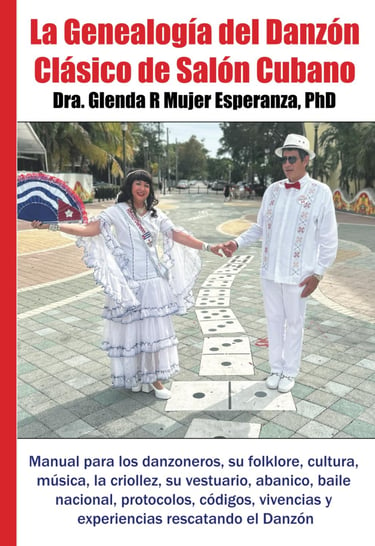






Dancing to the Cuban danzas of Ignacio Cervantes


Classic Cuban Danzón
Ballroom Dancing
info@ritmodanzon.com
Contact us